How do you make concrete in Minecraft? Combine 4 sand, 4 gravel, and 1 dye in a crafting table to make 8 concrete powder. Place the powder next to, into, or against flowing water or a water source, and it instantly becomes 8 solid concrete blocks in the dye’s color.
How do you make concrete in Minecraft?
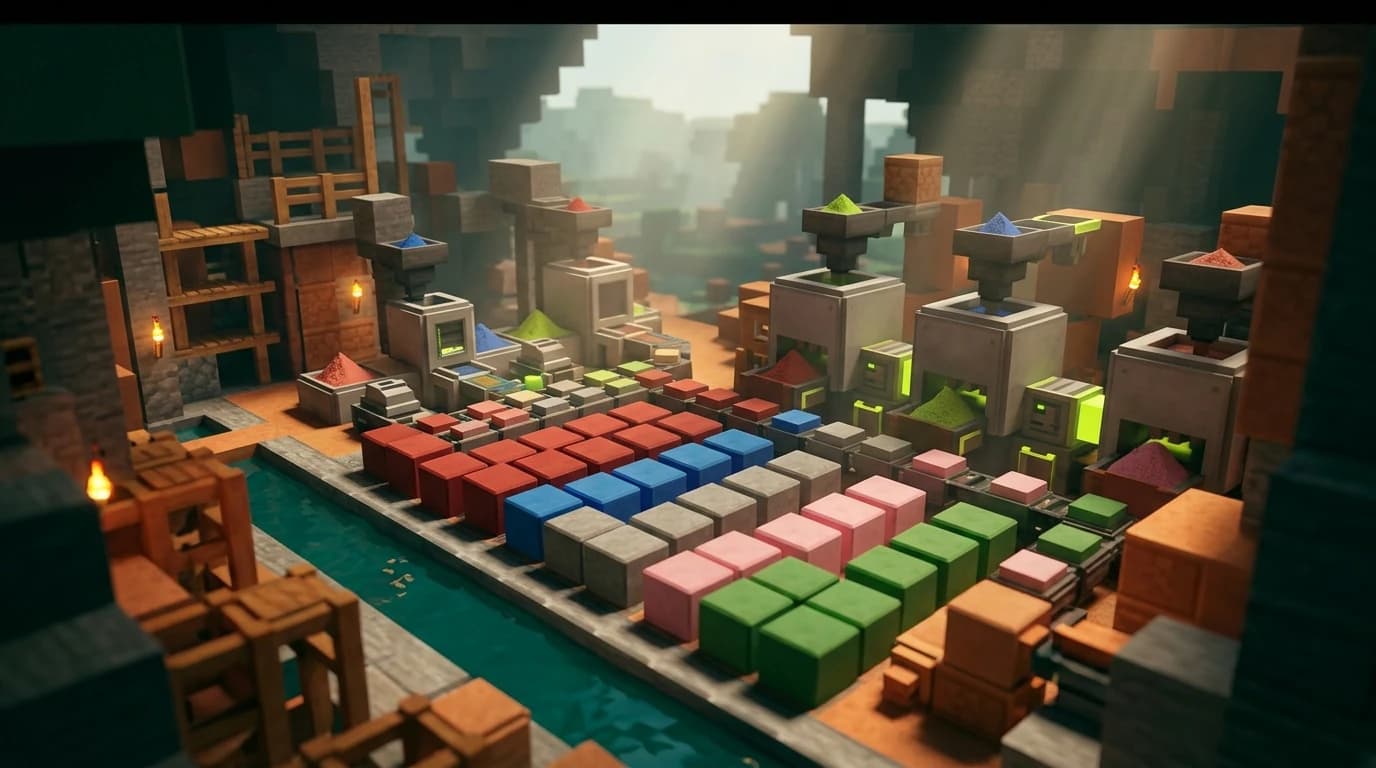
Minecraft does not let you craft solid concrete directly. You first craft colored concrete powder, then convert each powder block into concrete by making it touch water. The process works for all 16 concrete colors, including red, blue, gray, pink, and green.
Gather the materials
- 4 sand
- 4 gravel
- 1 dye in the color you want
- A crafting table
- Water, such as a bucket or a nearby water source
- A pickaxe for mining the finished concrete
Sand usually comes from beaches, deserts, rivers, and ocean floors. Gravel is common underground, in rivers, underwater, and in gravelly mountain areas. You can make dye from flowers, plants, lapis lazuli, ink sacs, cocoa beans, and other color-specific ingredients.
Concrete powder recipe and crafting layout
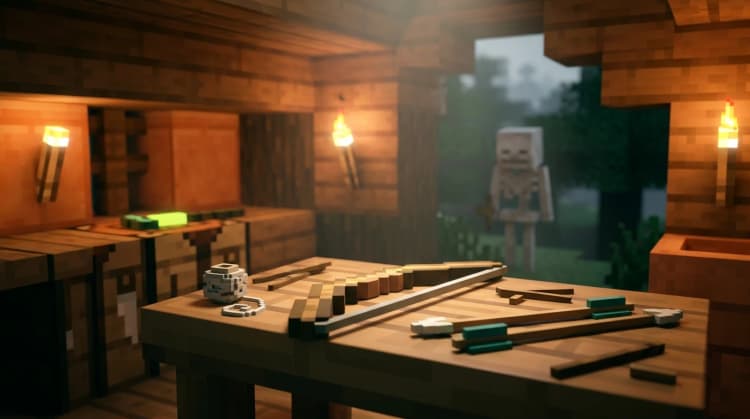
Use the following recipe to make eight blocks of concrete powder. The recipe is shapeless, so the ingredients do not need to occupy specific slots in the crafting grid.
| Ingredient | Quantity | Result |
|---|---|---|
| Sand | 4 | 8 concrete powder in the dye’s color |
| Gravel | 4 | |
| Any dye | 1 |
To arrange the recipe, place four sand, four gravel, and one dye anywhere in the 3×3 crafting grid. For example, you can put sand in the four corners, gravel in the top-center, bottom-center, middle-left, and middle-right slots, and the dye in the center slot. This layout is only an example because any arrangement produces the same result.
One crafting operation always gives you eight concrete powder blocks. The dye determines the color, while the sand and gravel provide the remaining ingredients. Red sand cannot replace regular sand in this recipe.
How to turn concrete powder into concrete
After crafting the powder, place it where it can touch water. The block changes into solid concrete immediately when it contacts a water source block, flowing water, or a suitable waterlogged block. You do not need a furnace, crafting table, or special tool for this step.
- Place a water source or create a short stream with a water bucket.
- Place the concrete powder directly in the water or next to the flowing water.
- Wait for the powder to harden into concrete.
- Mine the finished block with a pickaxe to collect it.
Water can touch the powder from the side, above, or below. You can also place powder in a row and run water across it. This is useful when producing large quantities for a floor, wall, road, pixel art design, or color-coded build.
Fast bulk-production method
For large projects, make a narrow trench beside a wall or platform. Fill the trench with water, then place concrete powder next to it in a line. Each block hardens as you place it. Once the row is complete, mine the concrete with a pickaxe and repeat the process.
Another efficient method is to build a tall column of powder beside water. Because concrete powder is affected by gravity, removing the lowest hardened block lets the remaining powder fall into position. This allows you to place and convert many blocks without individually building a tall scaffold.
How to make colored concrete
Concrete gets its color from the dye used in the powder recipe. You cannot recolor finished concrete by using another dye on it, so choose the correct dye before crafting.
- Red concrete: Use red dye, commonly made from a poppy, red tulip, or beetroot.
- Blue concrete: Use blue dye from lapis lazuli or a cornflower.
- Gray concrete: Use gray dye, made by combining black dye and white dye.
- Light gray concrete: Use light gray dye from suitable flowers or by combining dyes.
- Pink concrete: Use pink dye from a pink tulip, peony, or a combination of red and white dye.
- Green concrete: Use green dye by smelting a cactus in a furnace.
- White concrete: Use white dye, usually made from bone meal or a lily of the valley.
- Black concrete: Use black dye made from an ink sac or wither rose.
The remaining colors use their matching dye: orange, yellow, lime, cyan, light blue, purple, magenta, and brown. Every colored powder recipe still requires exactly 4 sand, 4 gravel, and 1 dye, and every batch produces 8 powder blocks.
What concrete is used for
Concrete is mainly a building block. Its smooth texture and strong, saturated colors make it useful when you want a clean modern appearance without the pattern found on wool or the rougher texture of terracotta.
- Modern houses and city buildings
- Roofs, floors, sidewalks, and roads
- Pixel art and large colored murals
- Colored storage rooms and industrial interiors
- Contrasting trim around quartz, glass, wood, or stone
- Large-scale walls and geometric structures
Solid concrete does not fall like sand or gravel, while concrete powder is affected by gravity. This makes concrete the better choice for permanent structures. Concrete also has a clean surface color, so it works especially well for bold patterns and builds that need consistent blocks across a large area.
Mine finished concrete with a pickaxe. If you break it without a pickaxe, it does not drop the block, so keep one in your hotbar when converting a large batch.
Where to find concrete in Minecraft
You generally obtain concrete by crafting concrete powder and hardening it with water rather than finding large natural deposits. The required sand, gravel, and dye are all obtainable in survival, making concrete a renewable building option when you have a reliable supply of its ingredients.
Red and cyan concrete can also generate in trail ruins, but this is not a dependable way to collect a specific color or a large quantity. Crafting is faster and gives you control over the exact color you need.
If you find concrete powder while exploring or receive it through another source, place the powder against water to convert it. Powder in your inventory does not harden just because it is thrown into water; the block must be placed in the world first.
Java and Bedrock concrete differences
The concrete recipe and water-conversion mechanic work the same way in Java Edition and Bedrock Edition. In both versions, you need 4 sand, 4 gravel, and 1 dye for 8 concrete powder, then water to turn the powder into solid concrete.
Some dye ingredients have small edition-specific crafting differences. Bedrock Edition can accept certain direct color ingredients, such as bone meal, lapis lazuli, cocoa beans, and ink sacs, in recipes where the corresponding dye is used. If your recipe book shows one of these substitutions, it produces the same colored powder. This does not change the number of sand, gravel, powder, or finished concrete blocks.
Common concrete mistakes and faster alternatives
- Using rain: Rain does not turn concrete powder into concrete.
- Using a splash water bottle: A splash water bottle does not harden the powder.
- Throwing powder into water: The powder must be placed as a block first.
- Expecting a furnace recipe: Concrete is not smelted. Craft powder, then use water.
- Using red sand: The recipe requires regular sand.
- Mining without a pickaxe: Finished concrete drops nothing when mined without one.
- Placing powder over an empty gap: It falls like sand and gravel until water converts it.
For the fastest workflow, prepare several stacks of sand, gravel, and one dye before you start. Craft all the powder at once, convert it beside a water trench, and use a pickaxe with Efficiency if you are producing thousands of blocks.