To answer where can i find iron in minecraft: look in exposed mountain stone, cave walls, and underground around Y 16; mine iron ore with a stone pickaxe or better, then smelt the raw iron in a furnace. Deep tuff veins below Y 0 can also provide large deposits.
Where can i find iron in minecraft?
Iron ore generates throughout the Overworld, so you do not need a specific biome to collect it. The fastest location depends on how much iron you need and how prepared you are for underground mining.
- Mountain slopes and cliffs: High elevations can expose iron ore directly on the surface or inside shallow stone.
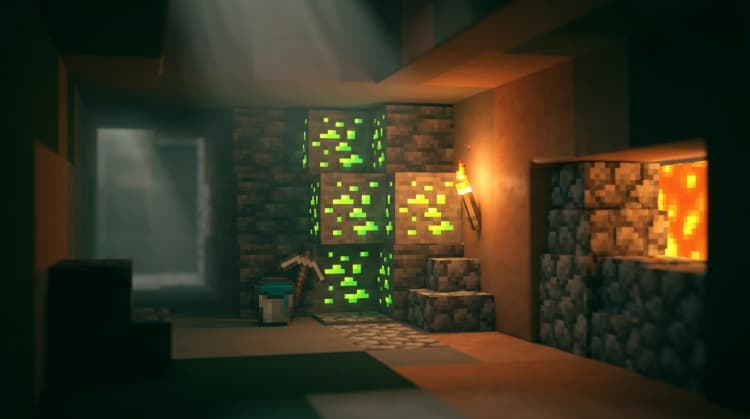
- Cave walls: Caves reveal large areas of stone, making visible iron veins easy to spot.
- Underground around Y 16: This is a reliable level for regular iron deposits.
- Deep underground below Y 0: Iron can appear in large ore veins mixed with tuff and blocks of raw iron.
Iron also generates at much higher elevations, with one generation band becoming especially common in tall mountain terrain. If you spawn near a large mountain, check the exposed stone before digging a long tunnel. Surface iron is safer and faster to collect than deep mining when you are still gathering your first tools.
How to find iron on the surface
Mountains are one of the best early-game places to search because erosion exposes stone without requiring a mine. Look along cliff faces, ravines, overhangs, and the walls of narrow valleys. Iron ore has a beige and brown appearance that stands out against gray stone and the darker deepslate found farther below.
Search exposed stone first
- Walk around mountain slopes, stony peaks, and exposed cliff faces.
- Check any visible stone above the grass line and inside shallow openings.
- Mine every connected iron ore block instead of taking only the block you can see.
- Light nearby caves before entering them, because exposed ore often attracts hostile mobs only a few blocks away.
Do not limit your search to snowy peaks. Iron can generate in many Overworld biomes, and the important feature is exposed stone rather than the biome name. A stony mountain, windswept hill, or large cave entrance can all lead to useful iron.
Best Y-levels for iron ore
Iron has several generation bands instead of one single best height. Regular iron ore can generate from deep underground to high mountain elevations. For practical mining, use the following targets:
- Y 16: A strong general-purpose level for underground iron mining.
- Y 0 to Y 72: A broad range where smaller iron deposits can appear at different heights.
- Above Y 80: Iron becomes increasingly useful to search for in mountainous terrain, with the highest generation concentration around the upper mountain levels.
- Below Y 0: Look for deepslate iron ore and large iron veins mixed with tuff and raw iron blocks.
For a new world, do not spend time digging directly to a high mountain coordinate just because it has a high iron concentration. A visible cave or nearby cliff is usually more efficient. Once you have food, torches, and a stone or iron pickaxe, underground mining around Y 16 becomes a dependable method.
How to mine iron ore
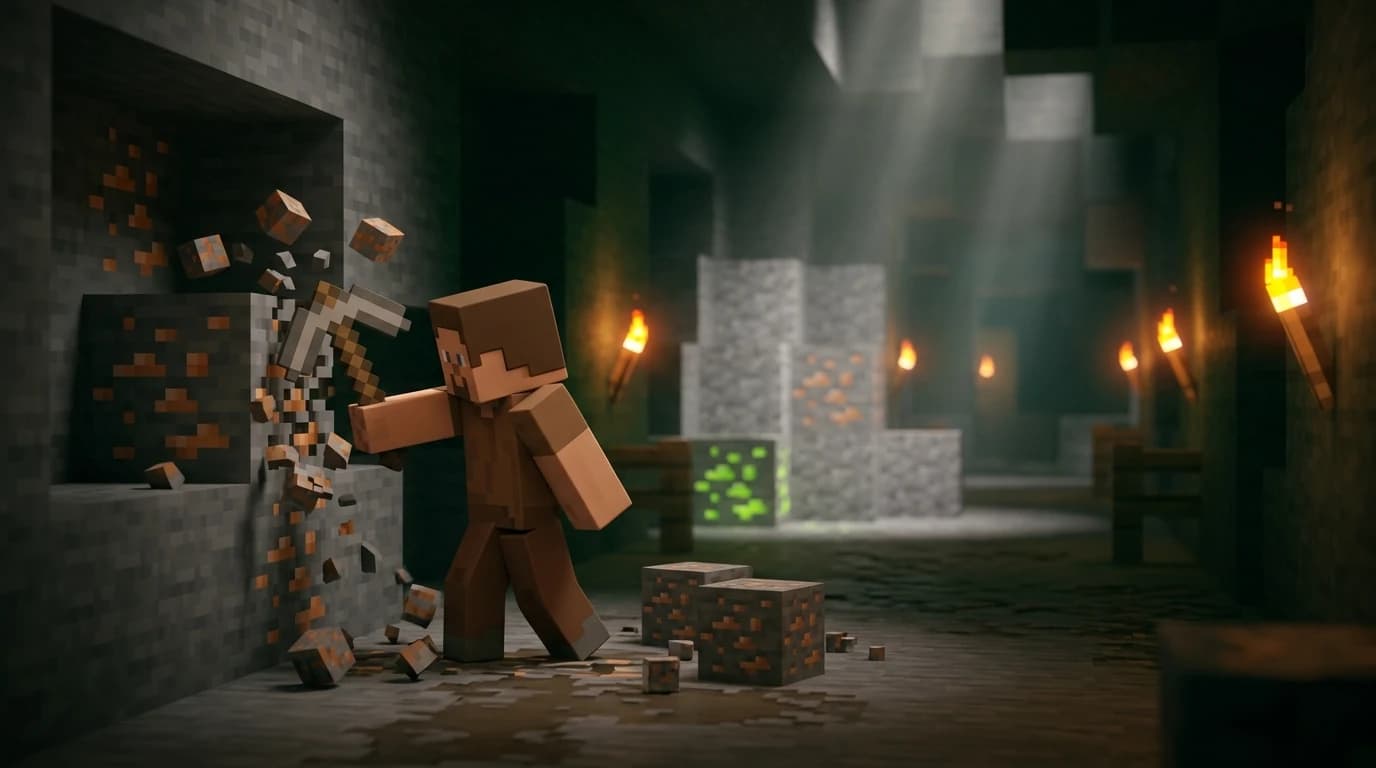
You need at least a stone pickaxe to collect iron from iron ore. A wooden pickaxe can break the block, but it does not drop the resource. Iron ore and deepslate iron ore both drop raw iron when mined without Silk Touch.
Bring the right equipment
- Stone pickaxe or better
- Torches for marking explored tunnels and lighting caves
- Food for healing and sprinting
- Extra blocks for crossing gaps and blocking lava
- Several pickaxes if you plan to search deep caves
Mine the entire visible cluster and inspect the blocks behind it. Iron veins frequently continue into the wall, floor, or ceiling. Fortune increases the amount of raw iron you receive from each ore block, while Silk Touch gives you the ore block itself for later use.
Regular iron ore breaks faster than deepslate iron ore. The deepslate version takes longer to mine but produces the same raw iron when collected with a suitable pickaxe. If you see tuff surrounding iron below Y 0, follow the tuff through the rock. It may lead to a large iron vein containing ordinary ore and raw iron blocks.
How to turn raw iron into iron ingots
You cannot craft raw iron directly into an ingot in a crafting grid. Smelt raw iron in a furnace or blast furnace. Each piece of raw iron produces one iron ingot and gives furnace experience when the smelting finishes.
| Ingredient | Quantity | Required station | Result |
|---|---|---|---|
| Raw iron | 1 | Furnace or blast furnace | 1 iron ingot |
Place the raw iron in the top input slot and fuel in the bottom slot. Coal, charcoal, wood, and other furnace fuels work. A blast furnace smelts ores faster than a regular furnace, but it only handles materials that belong in the ore-smelting category.
You can also smelt iron ore directly if you collected it with Silk Touch. This produces an iron ingot instead of raw iron. Fortune is usually better for gathering large amounts, while Silk Touch is useful when you want to store ore blocks or move them to a central smelting area.
Other ways to get iron
Mining is the simplest way to get your first iron, but it is not the only source. Several structures, mobs, and trading systems can provide iron during normal survival play.
- Iron golems: Defeated iron golems drop three to five iron ingots. Villages may naturally have golems, and players can later build iron farms using village mechanics.
- Chests: Iron ingots can appear as loot in several generated structures, including villages and underground locations.
- Zombies and related mobs: Zombies, husks, and zombie villagers have a small chance to drop an iron ingot when killed by a player or tamed wolf.
- Iron nuggets: Nine iron nuggets can be crafted into one iron ingot. Nuggets may come from some loot and mob-related sources.
These methods are useful when you need a few extra ingots, but mining is normally more consistent during the early game. An iron golem farm becomes practical later when you need hoppers, rails, anvils, buckets, or other recipes that consume iron repeatedly.
How to mine iron safely
Iron is common, but caves can still be dangerous. Use a controlled route instead of rushing toward every visible vein.
- Place torches on one side of the tunnel so you can identify the way back.
- Block off unexplored side passages temporarily if several mobs are nearby.
- Listen for lava before mining straight ahead or below your feet.
- Never dig directly downward or directly upward.
- Carry a water bucket once you have enough iron for one.
- Store extra raw iron in a chest before making a long return trip.
When exploring a large cave, mine the visible iron first, then retreat when your inventory or food runs low. You do not need to clear every passage in one visit. Mark the entrance with torches or blocks and return after smelting your first load.
Java and Bedrock iron locations
There is no important difference in the basic method for finding iron in current Java Edition and Bedrock Edition worlds. In both editions, search exposed mountain stone, cave walls, underground deposits, and deep tuff-associated veins. Both editions require a stone pickaxe or better to collect the ore.
Small differences can affect the exact shape of a cave or the amount you find in one location, because world generation is seed-dependent. If one cave has little iron, keep exploring rather than assuming the biome cannot generate it.
Common iron-mining mistakes
- Using a wooden pickaxe: Upgrade to stone before mining iron, or the block breaks without giving you raw iron.
- Searching only at diamond levels: Iron is not limited to the deep layers. Mountains and mid-level caves are often better targets.
- Ignoring mountain terrain: Exposed iron can save time and tools during the first day.
- Leaving connected ore behind: Check around and behind the visible block before moving on.
- Confusing raw iron with iron ore: Raw iron is the drop from normal mining and must be smelted before it becomes an ingot.
For a quick supply, search the nearest mountain or cave with a stone pickaxe. For a steady long-term supply, mine around Y 16, follow deep tuff veins below Y 0, and eventually consider an iron golem farm once your base uses iron faster than ordinary mining can provide.